
Training, Confidence, and Finding your own Way Forward
Since getting involved with SheADV, one message has come up again and again: Training is essential. It’s often talked about as the single most important step in becoming a capable, confident ADV rider. And for many riders, that’s absolutely true.
But living on the East End of Long Island, access to formal training isn’t exactly “readily available”. It’s not just the cost of the training itself—it’s the time off work, the travel, the accommodations. Suddenly, something that feels “essential” also feels… out of reach.
Still, the intention was always there.
After winning the BDR Keep It 100 Film Festival and receiving a generous cash prize, I knew I wanted to reinvest it back into the community—and into my own growth as a rider. So when I realized that Cassie at Clear Moto would be relatively close to our planned spring trip, I reworked our entire itinerary so Clay and I could spend a full day training with her.
⸻
Going Into It
I’ll be honest—I was nervous. What if I couldn’t keep up? What if I was told I shouldn’t be riding the kind of bike I want to learn on?
And what I didn’t expect…Was to leave the day questioning whether ADV riding was even for me.
⸻
A teachers Perspective
In what feels like a lifetime ago, I was trained as a secondary English education teacher. I’ve taught in both traditional classrooms and alternative learning environments—including an international school in Venezuela, where learning extended far beyond four walls. My film studies students didn’t just study storytelling—they created their own film festival. We took learning into the real world, even traveling to remote regions like the Orinoco Delta, where students worked on projects that supported local communities. I later worked within the Big Picture Learning framework, where education is built around student interests, real-world internships, and authentic experiences rather than standardized testing.
Because of those experiences, I’ve come to believe something deeply:
Not every student learns the same way.
And more importantly… The environment and method of teaching matter just as much as the content itself.
And suddenly, I wasn’t just showing up as a rider— I was showing up as a learner who has spent years understanding how people learn best.
⸻
When Training Feels Like a Classroom
Our session took place on a closed training course in Albuquerque, where we spent six hours working through structured drills:
balance and vision
clutch control
turning
body positioning
bike weight management
These are all foundational skills—and incredibly important. Cassie explained each exercise clearly and thoroughly. Her understanding of bike mechanics and rider technique is undeniable.
But for me? Something wasn’t clicking. I realized very quickly that my learning style leans heavily toward real-world situations, with coaching happening in the moment—through communication, adjustment, and feedback as things unfold.
For example, Cassie would give a detailed explanation of rider positioning—how shifting your weight affects the bike, how it responds, and even ways to improve those skills off the bike, like balance exercises at the gym - all super valuable and applicable information. Then we’d be asked to go practice in a small, open area.
But once we were actually riding, there was very little feedback in the moment. So when we returned and she asked how it went… I didn’t always have an answer.
Not because I wasn’t trying—but because I couldn’t fully recall what I had just felt, what I had done correctly, or what I should have adjusted. Without helmet comms, I often found myself completing drills unsure of what I was doing right… or wrong… or how to improve it while it was happening.
Trying to talk through it afterward made it even harder to connect the “feel” of the bike to the explanation—and even harder to understand how these drills would translate to real situations out on the trail. It felt less like learning through experience—and more like trying to remember instructions from earlier…without the cheat sheet - like sitting in a classroom where a teacher lectures at the front of the room, assuming every student is absorbing the information the same way—and will somehow translate it into real-world application later.
And that’s when it hit me: This felt like being back in a traditional classroom—one built around lectures, worksheets, and standardized methods.
Interestingly, I’ve spent years taking English riding lessons, and I realized something while reflecting on this experience: I learn best when the instructor is actively coaching me in real time—standing in the middle of the ring, calling out adjustments, feeling how the horse reacts, and helping me respond in the moment. That’s where things click for me.
⸻
The Doubt No One Talks About
Here’s the part I didn’t expect: Because I wasn’t picking up the drills as quickly—and because I couldn’t always retain or apply every detail of the explanations—I started to question myself. Watching Clay move through each exercise with more ease didn’t help.
I found myself thinking:
Is this too technical for me?
Should I even be riding a bike like this?
If I can’t “master” these controlled drills… do I really belong out there on the trail?
It wasn’t loud or dramatic. Just a quiet, creeping doubt. And I have a feeling I’m not the only rider who’s felt that.
⸻
The Part We Don’t Talk About
In education, we understand something important: Not every teaching method works for every student. But in the ADV training world? That conversation doesn’t seem to happen as often. Training is often presented as the path to confidence. But what if the type and setting of training matters just as much as the decision to train? Because while I watched Clay thrive—gaining confidence and improving with every drill—I found myself struggling to fully process each exercise before moving on to the next.
And instead of building confidence…I left feeling uncertain.
⸻
What I Did Gain
This is important: This training was absolutely valuable. We learned practical, real-world skills—especially the buddy lift to pick-up a bike, which we used multiple times during our 12-day trip. That alone made a huge difference. We also practiced balance techniques I had never explored before—skills I’ve since incorporated into my own routines.
Cassie is an exceptional rider and a highly knowledgeable instructor. Her experience, her presence in the ADV space, and the resources she provides—especially her videos and fitness guidance—are incredibly valuable.
That’s not in question.
⸻
Where It Didn’t Fully Land (For Me)
Where I struggled wasn’t with the content—it was with the delivery style. I realized I would have benefited more from:
real-time coaching through a headset
working through challenges on actual trail terrain
learning in motion rather than repetition on a closed course
And perhaps most importantly…more focus on riding as a team.
Since Clay and I ride together often, I had hoped for more guidance on communication, pacing, and support strategies between partners—something that was only briefly touched on.
⸻
The Bigger Takeaway
This experience reinforced something I’ve known for years as an educator: There is no one-size-fits-all approach to learning. And that applies just as much to motorcycle training as it does to a high school classroom. Some riders will thrive in structured drills where they are instructed; then go practice in a controlled environment.
Others—like me—may grow more through:
repetition in real terrain
pushing through challenges
learning alongside a trusted riding partner
⸻
Where My Confidence Actually Grew
Here’s what surprised me most: My confidence didn’t come from the training day. It came in the days that followed - riding for 12 consecutive days, facing difficult terrain time after time, taking on challenges I wouldn’t have found on the East Coast. And especially… Being supported by a riding partner who met me with patience, encouragement, and trust.
Water crossings became a turning point. There were so many on the Texas Hill Country BDR-X that avoiding them wasn’t an option, and I was able to improve with each one. So Clay pushed me—gently but firmly—to lead. And I did - successfully, almost every time.
And that’s where confidence was built. Not in perfection. But in repetition, challenge, and real experience.
⸻
So… Should You Train? Yes. Absolutely.
But also…understand how you learn. Try different approaches. Stay open. Be honest with yourself if something doesn’t click. Because the goal isn’t just to complete training, it’s to build confidence.
From the Saddle - North Fork Moto
Motorcycles. Backroads, Books, And the stories we collect along the way.
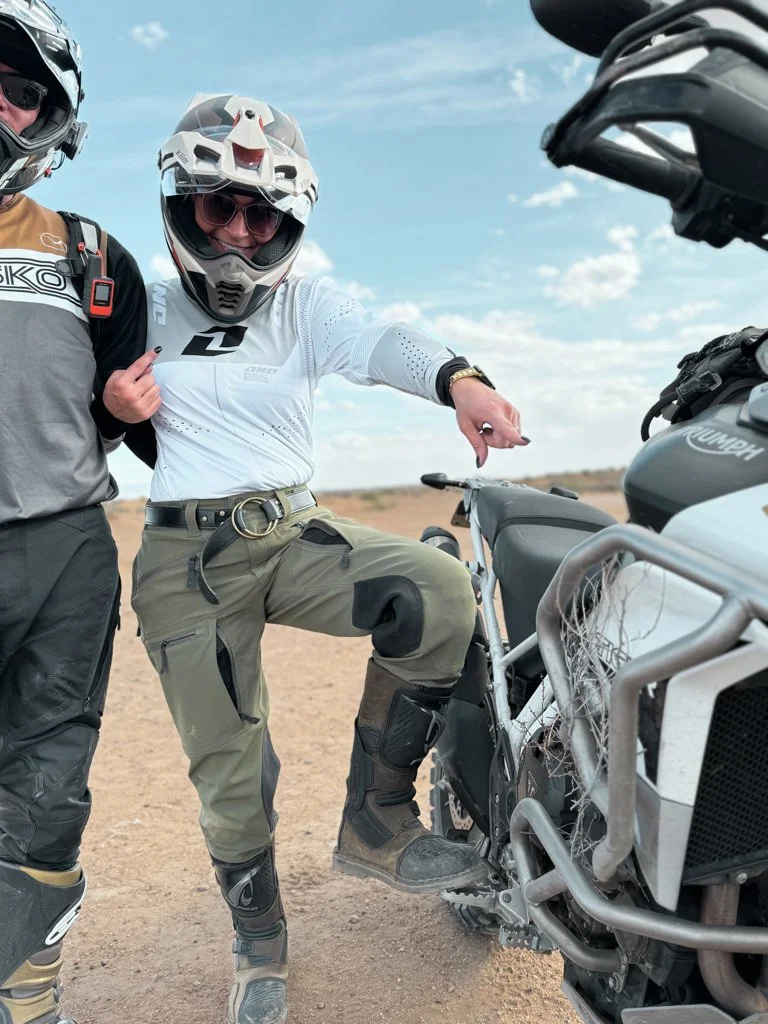
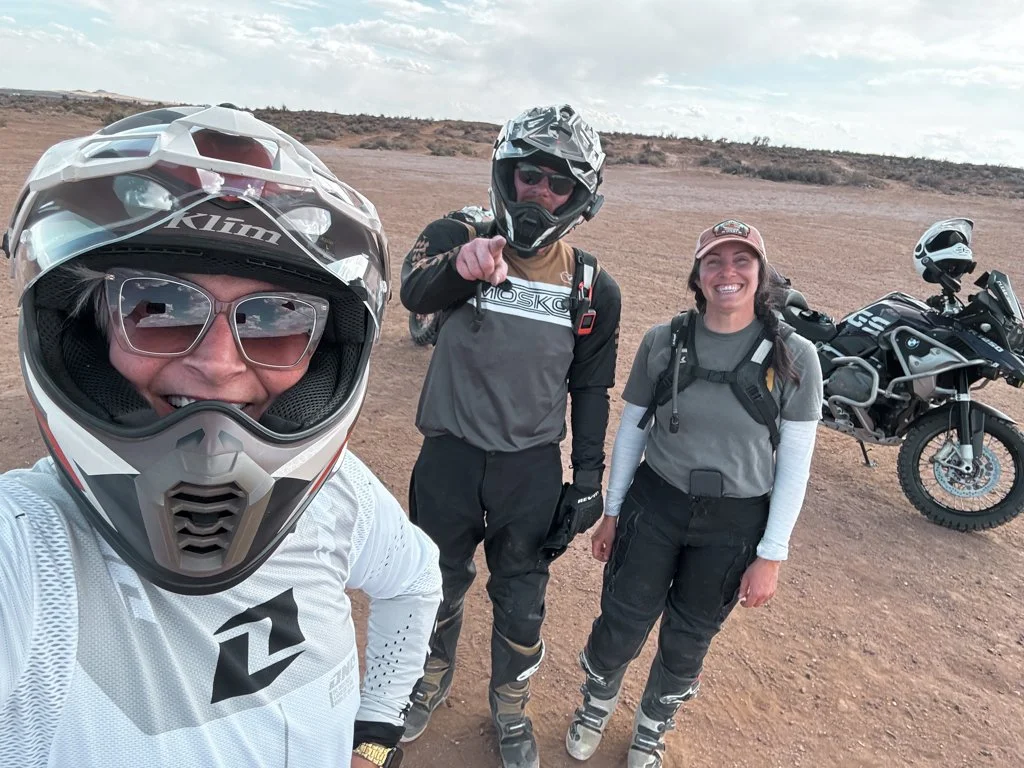
Instead of celebrating with confetti, we use cones.